Why Does My Heart Race at Night in My 40s?
Written with Autumn — The Change’s on-device AI perimenopause coach.
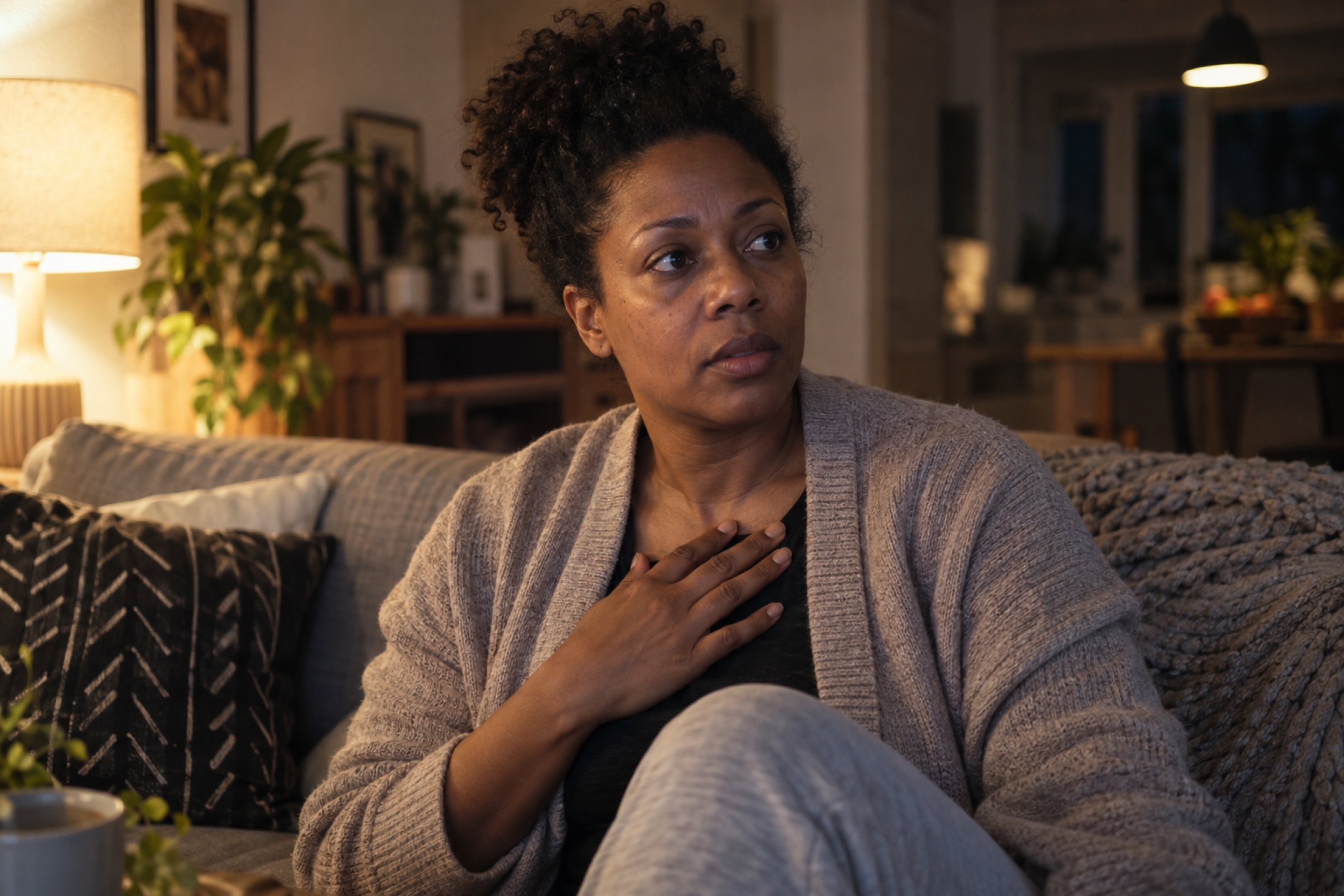
The short answer
A racing heart at night can feel startling. Heart palpitations can happen around menopause, but waking with one isn’t proof that hormones are responsible. Lack of sleep, stress or anxiety, caffeine, alcohol, nicotine, medicines, iron-deficiency anaemia, an overactive thyroid, an abnormal heart rhythm and other heart problems can also cause palpitations. Repeated, prolonged or worrying episodes deserve medical assessment.
What may be happening
“My heart is racing” can describe a heartbeat that feels unusually noticeable, fast, irregular, pounding or fluttering. The NHS notes that palpitations can last seconds, minutes or longer and are often harmless, but the sensation itself cannot identify the cause.
At night, a racing or pounding heartbeat may appear alongside a hot flush, night sweat, anxiety or broken sleep. That mix can show up during perimenopause, but the same sensation can have other explanations. Think of it as a clue to explore, not a diagnosis.
What you might notice
- Whether the heartbeat feels fast, irregular, pounding, fluttering or like skipped beats.
- When it starts, how long it lasts and whether it stops on its own.
- Whether it appears with a hot flush, night sweat, anxiety, poor sleep, caffeine, alcohol, nicotine or exertion.
- Any new medicines, dose changes or other symptoms.
- Whether episodes are becoming more frequent or lasting longer.
Why it can happen around perimenopause
The NHS says palpitations can sometimes be a sign of going through menopause. UCLH’s patient guidance also describes hot flushes and night sweats as sometimes occurring with palpitations. Those sources support a possible association; they do not support assuming that every racing heart in your 40s is hormonal.
That distinction matters because the same feeling can occur with lack of sleep, stress or anxiety, stimulant use, anaemia, thyroid problems or a heart rhythm problem. A clinician may need to consider the whole pattern and decide whether an ECG or other assessment is appropriate.
What may help
For a week or two, notice when it happens and what tends to travel with it. Was it after poor sleep, caffeine, alcohol, nicotine or exertion? Did it come with a hot flush, anxiety or another symptom? You don’t need a perfect log—the pattern is what matters. Check the information supplied with medicines, but do not stop a prescribed medicine without professional advice.
When to talk to a clinician
Arrange medical advice if the episodes keep returning, are happening more often, last longer than a few minutes, or you have a heart condition or a family history of heart problems. Ask about the full pattern, including periods, hot flushes, sleep, anxiety, medicines and the feeling in your chest or throat.
Seek urgent care when appropriate
If your heart is racing and does not settle, or you also have chest pain, shortness of breath, feeling faint or fainting, seek emergency help now. If those symptoms have stopped, seek urgent medical advice rather than waiting for another episode.
Questions women often ask
Can a hot flash make my heart feel fast?
Hot flushes and night sweats can occur with palpitations during menopause, but that pattern still does not rule out other causes. Recurrent or worrying episodes should be assessed.
Is a racing heart at night just anxiety?
Anxiety and stress can trigger palpitations, but it is not safe to decide from the timing alone that anxiety is the explanation. Describe what you feel and what else is happening.
Should I track my pulse?
A note of when an episode starts, how long it lasts and whether it feels regular or irregular can help a clinician. Do not delay urgent care while trying to measure it.
Related reading
Still trying to connect the dots?
If the racing heart is appearing alongside changes in sleep, temperature, periods or mood, Autumn can help you explore the pattern and gather questions for a healthcare professional. She is the private, on-device AI coach inside The Change—not a clinician.
Sources & evidence
- Heart palpitations — NHS
- Understanding menopause — University College London Hospitals NHS Foundation Trust
Sources checked: 17 September 2026.