Category: Brain & Memory

Brain fog, memory, concentration, words and thinking clearly.

  • Why Can’t I Concentrate Like I Used To?

    Why Can’t I Concentrate Like I Used To?

    Ask Autumn / Brain & Memory

    Why Can’t I Concentrate Like I Used To?

    Written with Autumn — The Change’s on-device AI perimenopause coach.
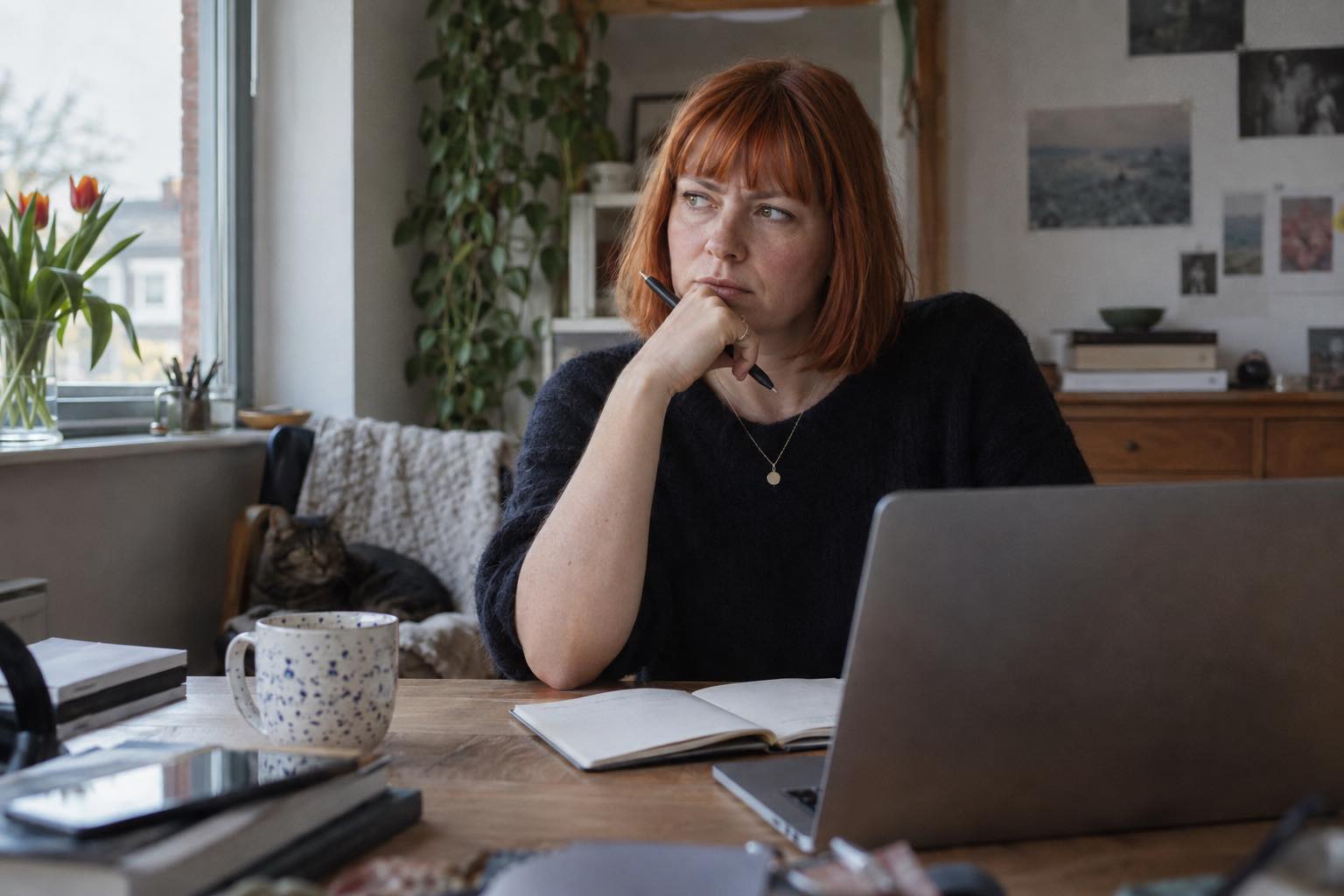
    Red-haired woman at a home desk pausing with a pen while trying to concentrate.

    The short answer

    A change in concentration can happen during perimenopause, but it is not specific to it. Broken sleep, stress, anxiety, low mood, medicines and other health conditions can all make focus harder. The useful question is what else changed alongside your concentration.

    When focus feels less reliable

    You may read the same line twice, lose the thread of a meeting, or walk into a room and forget why. That can be unsettling, especially if you used to rely on your concentration without thinking about it.

    How perimenopause may fit

    The NHS lists problems with memory and concentration among possible menopause and perimenopause symptoms, and notes that they may feel worse when sleep is poor or you are very tired. The Menopause Society describes mood, sleep and cognitive changes as overlapping parts of the transition, without suggesting that every concentration problem has one cause.

    What else can affect concentration

    • A run of broken nights, night sweats or early waking.
    • Anxiety, low mood or a mind that keeps scanning for problems.
    • Long stretches without food, water or a proper pause.
    • A new medicine, health condition or level of stress.
    • A task that is more demanding than it looks because you are already tired.

    Try a smaller focus experiment

    Choose one change you can test rather than trying to optimise everything. Put the hardest task earlier, remove one source of interruption, or take a short movement break before starting again. Notice whether concentration changes with sleep, heat, mood or the time of day. You do not need a perfect log; a few spoken observations can be enough.

    When to ask for help

    Talk with a clinician if concentration changes are persistent, worsening, affecting work or driving, or arriving with low mood, severe anxiety, new neurological symptoms or other health changes. Sudden confusion, trouble speaking, weakness or a severe new headache needs urgent medical attention.

    Related reading

    Trying to understand the change in focus?

    If concentration is changing alongside poor sleep, anxiety, heat or cycle changes, Autumn can help you describe the pattern and prepare questions for a healthcare professional. Autumn is the private, on-device AI coach inside The Change—not a clinician.

    Sources & evidence

    Sources checked: 18 September 2026.

  • Is Brain Fog a Sign of Perimenopause?

    Is Brain Fog a Sign of Perimenopause?

    Ask Autumn / Brain & Memory

    Is Brain Fog a Sign of Perimenopause?

    Written with Autumn — The Change’s on-device AI perimenopause coach.

    Woman with a short light-brown bob pausing with a pen over a blank notebook while gathering her thoughts.

    The short answer

    Brain fog can happen during perimenopause, especially when sleep, mood and physical symptoms are shifting, but it is not proof that hormones are the cause. Brain fog is a description of an experience—not a diagnosis—and persistent or sudden changes deserve proper attention.

    What people mean by brain fog

    Brain fog might mean losing a word, struggling to switch tasks, forgetting what you just read or feeling slower than usual. It can be frustrating precisely because you may still know the answer is somewhere in your mind.

    How perimenopause may fit

    The NHS includes poor memory and brain fog among possible symptoms, and says they may feel worse with sleep problems and tiredness. The Menopause Society also lists memory problems and mood disturbances among changes that can occur around the menopause transition.

    Why context matters

    • Is the fog worse after a broken night or a run of night sweats?
    • Are anxiety or low mood using up your attention?
    • Have your periods, headaches, temperature or energy changed too?
    • Did a new medicine, illness, stressor or sleep problem arrive first?

    What may help today

    Give your working memory fewer jobs at once. Keep one visible next step, use a voice note instead of holding every detail in your head, and pause before switching tasks. Notice what makes the fog lighter or heavier. The aim is not to prove perimenopause; it is to understand what your brain is dealing with.

    When brain fog needs a medical check

    Arrange a clinical review if the change is persistent, worsening, interfering with work or daily life, or making you feel unsafe. Seek urgent help for sudden confusion, new weakness, trouble speaking, loss of vision or a severe new headache.

    Related reading

    Want to make the fog more specific?

    If brain fog is travelling with sleep, mood, temperature or cycle changes, Autumn can help you put the experience into words and prepare questions for a healthcare professional. Autumn is the private, on-device AI coach inside The Change—not a clinician.

    Sources & evidence

    Sources checked: 18 September 2026.

  • Why Am I Forgetting Words in My 40s?

    Why Am I Forgetting Words in My 40s?

    Ask Autumn / Brain & Memory

    Why Am I Forgetting Words in My 40s?

    Written with Autumn — The Change’s on-device AI perimenopause coach.

    Woman working at a laptop pausing while trying to remember a word.

    The short answer

    A familiar word arriving a little late can happen during the menopause transition. Poor sleep or mood changes can make it more noticeable. It does not prove that you are in perimenopause—and it does not automatically mean a neurological illness. If the change is obvious, worsening or interfering with daily life, bring it to a healthcare professional rather than trying to explain it away.

    What may be happening

    Word-finding difficulty can feel like knowing exactly what you mean but not being able to retrieve the word quickly. You may lose a familiar name in conversation, pause during a meeting, swap one word for another or lose the thread while multitasking. Those experiences can be frightening, especially when they happen in public or at work.

    The Menopause Society says complaints about concentrating and remembering are common during the menopause transition and that midlife cognitive function can be influenced by menopause symptoms such as sleep difficulties and mood changes. That makes the experience worth noticing, not an invitation to assume every lapse is hormonal.

    What you might notice at work and in everyday life

    • A familiar word arrives a few seconds late during a presentation or meeting.
    • You start a sentence and lose the point when several tasks compete for attention.
    • You rely more heavily on notes, reminders or written follow-up.
    • Sleep loss, worry, low mood or a crowded schedule makes the problem more noticeable.
    • You remain able to recognise the word or idea once someone gives you time or a cue.

    Why it can happen around perimenopause

    Perimenopause is a period of changing cycles and symptoms, and Memory problems are listed among common menopause and perimenopause symptoms by the NHS. The Menopause Society describes the usual midlife changes as more subtle than the major loss of mental abilities associated with dementia, while still advising that obvious changes should be discussed with a healthcare professional.

    There may not be one neat explanation. Sleep disruption, mood, stress, other health issues, medicines and the demands of work can all shape how easily you retrieve information on a particular day.

    What may help

    Make the task easier to hold in mind: write down the next point before a meeting, keep one note open rather than switching between several, pause instead of guessing and ask for a moment to find the word. Put important follow-up in writing. These are practical supports, not proof that you have a disorder.

    For a week or two, notice when word-finding is hardest. Is it after poor sleep, during a stressful meeting, when you are multitasking or when your mood is low? You don’t need a perfect diary—the pattern is useful. The Menopause Society suggests staying physically and mentally active, maintaining social connection and reducing cardiovascular risk factors as part of supporting health; it does not recommend hormone therapy simply to improve cognition.

    When to talk to a clinician

    Arrange a conversation if the changes are persistent, clearly worsening, affecting work or daily life, or worrying you. Bring examples rather than a general label such as “brain fog,” and mention sleep, mood, medicines and other symptoms. A clinician can consider possible contributors without assuming that perimenopause is the answer.

    If a sudden, severe change is happening or you feel acutely unwell, seek urgent medical help rather than waiting to see whether it passes.

    Questions women often ask

    Does forgetting words mean I have dementia?

    No. Everyday word-finding complaints can occur in midlife and around the menopause transition, but a pattern that is obvious, progressive or affecting daily life deserves a professional assessment.

    Why is it worse in meetings?

    Meetings often combine pressure, multitasking, rapid turn-taking and the need to retrieve information aloud. Sleep loss or anxiety can make that load feel heavier. A work pattern is still worth describing if it is new or worsening.

    Could poor sleep be part of it?

    It can be. Sleep difficulties and mood changes are among the factors the Menopause Society identifies as influencing midlife cognitive function. That does not exclude other explanations.

    Related reading

    Still trying to connect the dots?

    If you’re trying to connect the dots between word-finding, sleep, mood or cycle changes, Autumn can help you describe the pattern and prepare a focused question for a healthcare professional. She is the private, on-device AI coach inside The Change—not a clinician, and she cannot diagnose.

    Sources & evidence

    Sources checked: 17 September 2026.