Category: Periods & Cycles

Heavier, lighter, shorter, longer or changing menstrual cycles.

  • Why Are My Periods Getting Closer Together in My 40s?

    Why Are My Periods Getting Closer Together in My 40s?

    Ask Autumn / Periods & Cycles

    Why Are My Periods Getting Closer Together in My 40s?

    Written with Autumn — The Change’s on-device AI perimenopause coach.
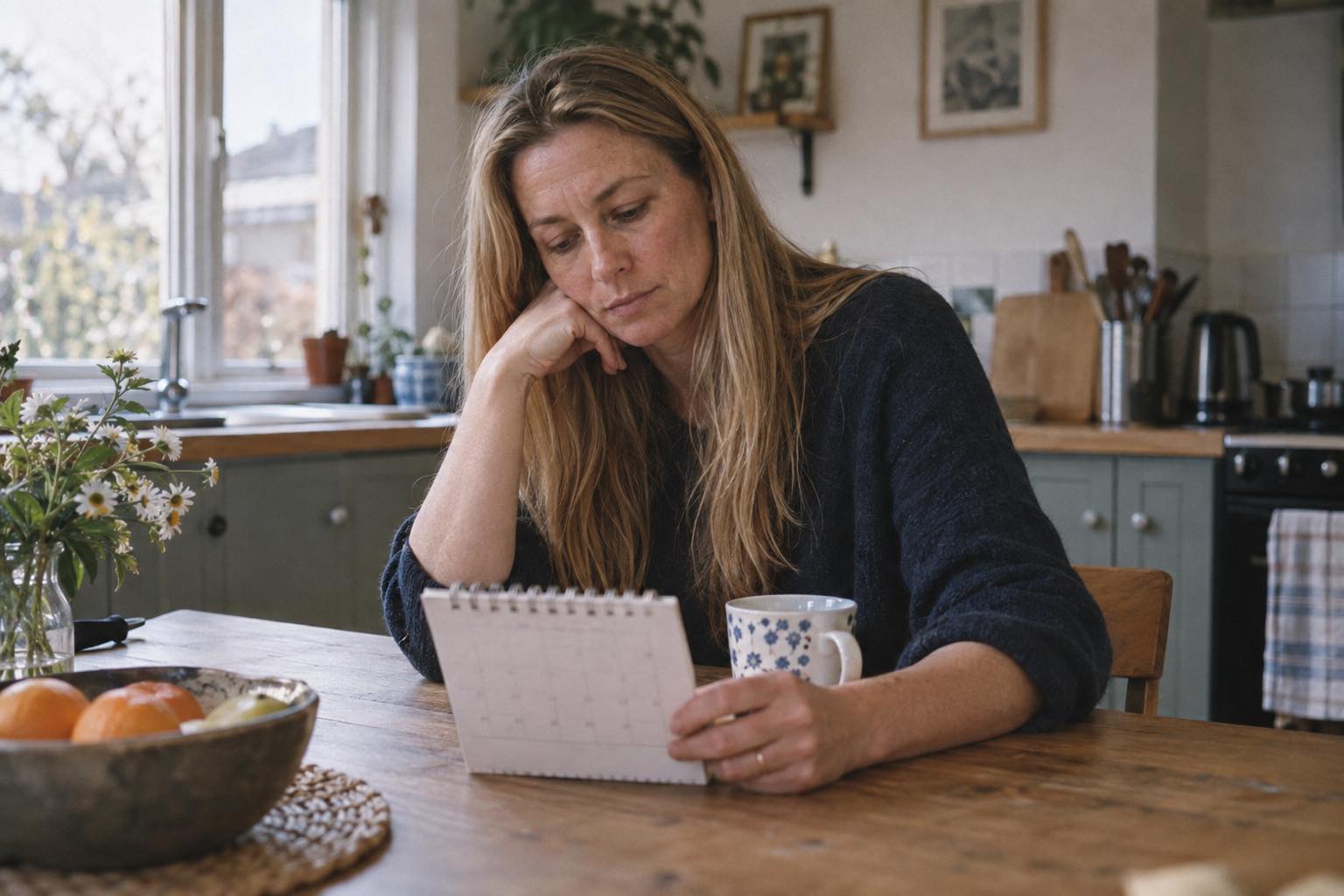
    Blonde woman sitting at a kitchen table checking a calendar while noticing a change in her menstrual cycle.

    The short answer

    Periods can become closer together during perimenopause, because cycle timing often becomes less predictable. But a shorter cycle can have other explanations too, and a noticeable change in bleeding is worth discussing with a healthcare professional.

    What a shorter cycle actually means

    Your cycle is counted from the first day of one period to the first day of the next. A few early periods may be ordinary variation; a repeated change can be useful information, especially if the flow, pain or symptoms around it have changed too.

    How perimenopause may fit

    The NHS says periods may happen more often or less often during perimenopause, and bleeding may become heavier or lighter. The NHS describes irregular periods as one of the main signs of perimenopause.

    What else belongs in the picture

    • Could pregnancy be possible? You can still become pregnant during perimenopause.
    • Are you using hormonal contraception, which can change bleeding patterns?
    • Has the flow become much heavier, or are you bleeding between periods or after sex?
    • Are pain, tiredness, dizziness or other symptoms arriving with the change?

    What to notice

    You do not need a perfect calendar to start a conversation. Notice the gap between periods, how long bleeding lasts, how heavy it feels, and what else travels with it. A short voice note to Autumn can be easier than building an elaborate spreadsheet.

    When to ask for help

    Talk with a clinician if the change keeps happening, is worrying you, affects daily life or comes with heavier bleeding, significant pain, bleeding between periods or after sex. Seek urgent care if bleeding is very heavy and you feel faint, weak or unwell.

    Related reading

    Trying to make sense of a changing cycle?

    Autumn can help you describe the timing, flow and symptoms around your periods before you decide what questions to take to a healthcare professional. Autumn is the private, on-device AI coach inside The Change—not a clinician.

    Sources & evidence

    Sources checked: 18 September 2026.

  • Why Did My Period Suddenly Become Irregular?

    Why Did My Period Suddenly Become Irregular?

    Ask Autumn / Periods & Cycles

    Why Did My Period Suddenly Become Irregular?

    Written with Autumn — The Change’s on-device AI perimenopause coach.

    Red-haired woman sitting on a bed folding laundry while reflecting on a change in her periods.

    The short answer

    Irregular periods are often one of the first signs of perimenopause, but they are not a diagnosis by themselves. Pregnancy, hormonal contraception, stress, weight change, thyroid problems and other health conditions can also change when bleeding arrives.

    Irregular does not mean one particular thing

    A period can arrive earlier, later, be skipped, last a different number of days or change in flow. One unusual cycle does not tell you the cause. A pattern over time gives a clinician more to work with.

    How perimenopause may fit

    The NHS says periods may become irregular, lighter or heavier during perimenopause. The transition can make timing harder to predict, but that does not mean every irregular bleed should be written off as hormones.

    Other explanations to remember

    • Take a pregnancy test if pregnancy is possible, even if your cycles are changing.
    • Hormonal contraception can make bleeding irregular or stop it altogether.
    • Stress, marked weight change, heavy exercise and some medicines can affect periods.
    • Thyroid conditions and other health problems can also change menstrual timing.

    What to do next

    Notice the dates, flow, pain and any bleeding between periods or after sex. You can keep this as a simple calendar note or say it aloud to Autumn. The goal is a usable account of what changed, not a perfect record.

    When a clinician should check it

    Arrange an appointment if irregular periods continue, are accompanied by heavy bleeding or pain, or are affecting your life. Any bleeding after 12 months without a period needs medical assessment. Urgent advice is appropriate if heavy bleeding makes you faint, weak or unwell.

    Related reading

    Want to see the pattern more clearly?

    Autumn can help you describe the change in your cycles and the symptoms around them so you can prepare for a healthcare conversation. Autumn is the private, on-device AI coach inside The Change—not a clinician.

    Sources & evidence

    Sources checked: 18 September 2026.
  • Why Are My Periods Suddenly So Heavy in My 40s?

    Why Are My Periods Suddenly So Heavy in My 40s?

    Ask Autumn / Periods & Cycles

    Why Are My Periods Suddenly So Heavy in My 40s?

    Written with Autumn — The Change’s on-device AI perimenopause coach.

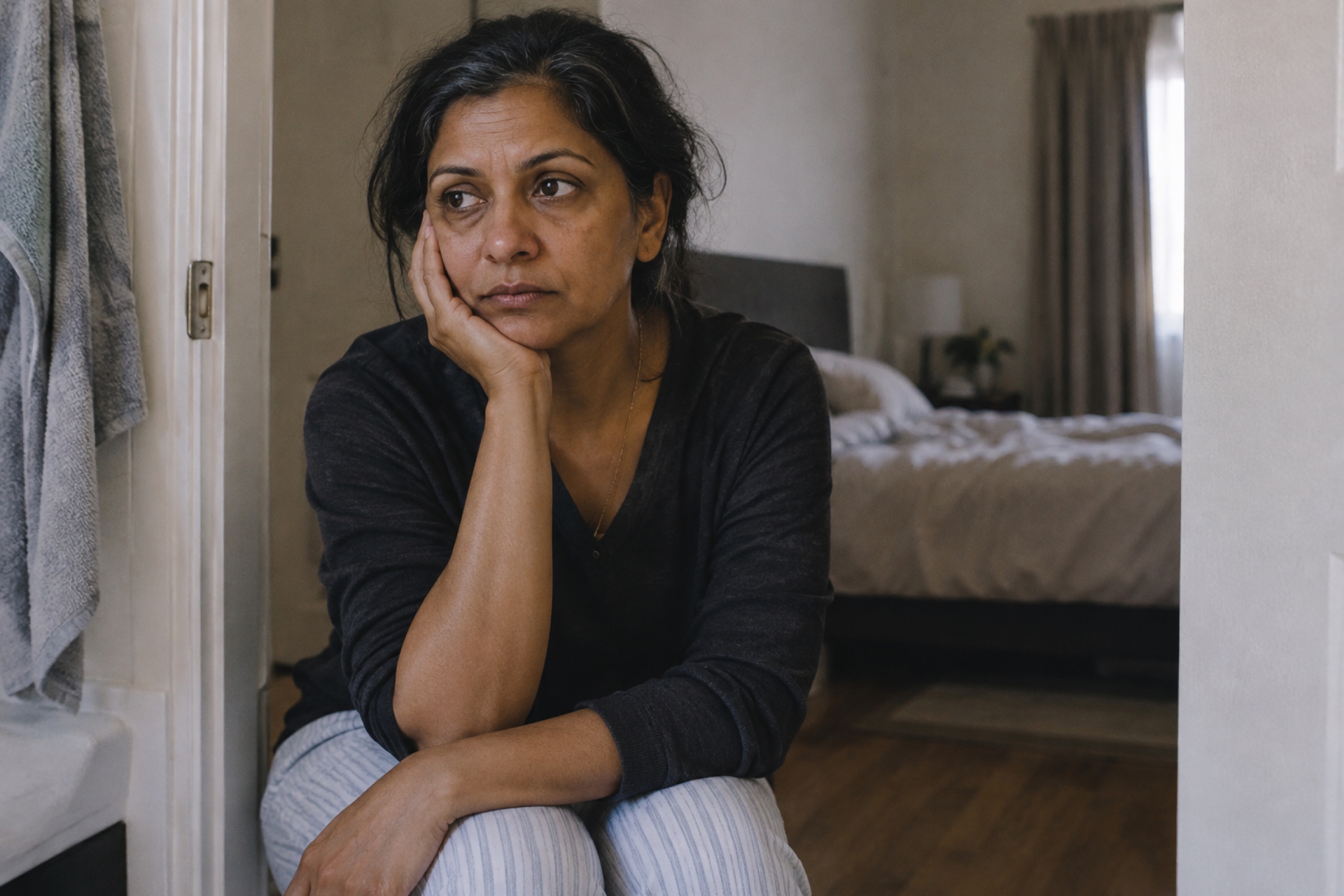
    Woman sitting quietly at home looking concerned about a change in her period.

    The short answer

    Periods can become heavier or less predictable as menopause approaches. But a sudden or very heavy period isn’t something to automatically file under perimenopause. Bleeding that lasts more than 7 days, needs a pad or tampon change every 1 to 2 hours, passes larger clots, leaks through clothes or bedding, or is disrupting your life is worth discussing with a clinician.

    What may be happening

    Perimenopause can change the timing, duration and flow of periods. The NHS notes that periods can sometimes become heavy when you are approaching menopause. It is one possibility, not an answer on its own.

    Heavy bleeding can also have other causes, including fibroids, endometriosis, adenomyosis, conditions that affect clotting, some medicines and other conditions affecting the womb or ovaries. Rarely, heavy periods can be a sign of womb cancer. This is not a reason to assume the worst; it is a reason not to assume the cause without an assessment.

    What counts as heavy?

    • Changing a pad or tampon every 1 to 2 hours, or emptying a menstrual cup more often than recommended.
    • Needing to use two types of period product together.
    • Bleeding for more than 7 days.
    • Passing clots larger than about 2.5cm.
    • Bleeding through clothes or bedding.
    • Missing exercise, work or normal activities because of the bleeding.
    • Feeling tired or short of breath often.

    Why it can happen around perimenopause

    Hormonal and cycle changes can make bleeding vary as menopause approaches. But bleeding is also affected by the lining of the womb, ovulation patterns, fibroids, adenomyosis, endometriosis, medicines and conditions that affect clotting. A period becoming heavier is information to bring to a clinician, not evidence that the change is harmless.

    What may help

    You don’t need a perfect log. When you speak with a clinician, it helps to describe when bleeding starts and stops, how often you change products, whether you pass clots, whether you bleed between periods or after sex, how much pain you have and how it affects daily life. You can use a voice note if that is easier than writing everything down. Bring a list of medicines and contraception as well.

    A clinician may ask about the bleeding and related symptoms, examine you when appropriate, and arrange tests such as blood tests or scans depending on the pattern. Heavy bleeding can be associated with iron-deficiency anaemia, so ongoing tiredness or shortness of breath is important to mention.

    When to talk to a clinician

    Arrange an appointment if heavy bleeding is affecting your life, has continued for some time, comes with severe period pain, happens between periods or after sex, or occurs with pain when you pee, poo or have sex. Ask for advice rather than waiting for it to become “normal” just because you are in your 40s.

    Seek urgent care when appropriate

    If the bleeding is severe and you feel faint, very dizzy, short of breath or acutely unwell, seek urgent medical help. If you have recently missed a period and have unusual bleeding with abdominal or pelvic pain, seek urgent advice.

    Questions women often ask

    Can perimenopause cause heavy periods?

    It can be part of the picture as periods change approaching menopause, but heavy bleeding has several possible causes. A change in flow deserves attention if it is persistent, disruptive or worrying.

    Is a 7-day period automatically abnormal?

    The NHS lists periods lasting more than 7 days as one sign that bleeding may be heavy. Your overall pattern and its effect on your life still matter, so discuss concerns rather than relying on one measure.

    What should I notice before an appointment?

    It helps to be able to describe dates, duration, product changes, clots, pain, bleeding between periods or after sex, tiredness, shortness of breath, medicines and how the bleeding affects your activities. A voice note can be easier than trying to remember everything in the appointment.

    Related reading

    Still trying to connect the dots?

    If your bleeding is changing alongside sleep, temperature, mood or energy, Autumn can help you organise what you’re noticing and prepare a clear question for a healthcare professional. She is the private, on-device AI coach inside The Change—not a clinician.

    Sources & evidence

    Sources checked: 17 September 2026.