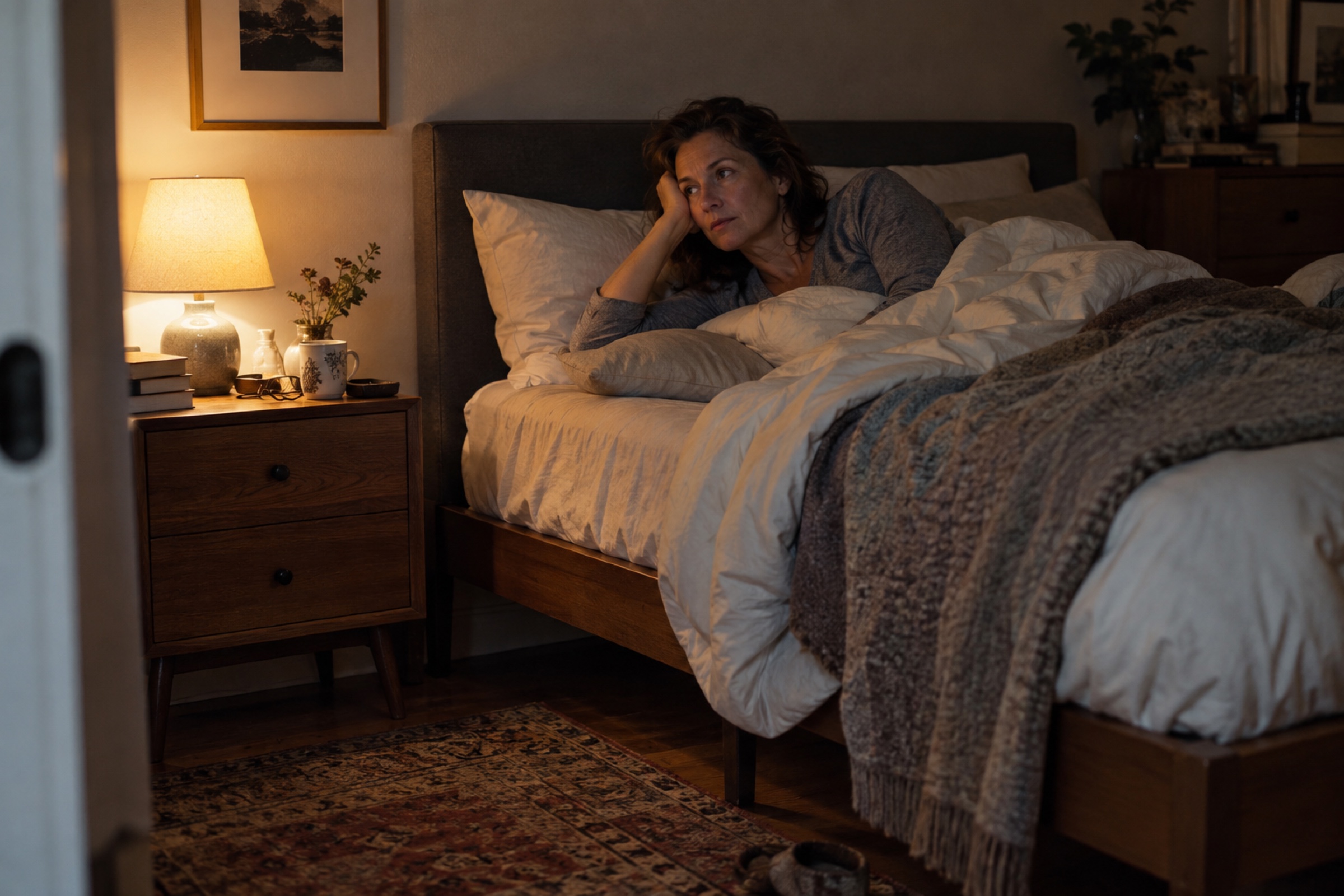
Why Am I So Tired Even After a Full Night’s Sleep?
Written with Autumn — The Change’s on-device AI perimenopause coach.

The short answer
Feeling exhausted after a full night in bed can happen when sleep has been broken or unrefreshing, even if you do not remember waking. Perimenopause may contribute through night sweats, changing sleep or mood, but so can stress, medicines, iron deficiency, thyroid problems, sleep apnoea and other health issues. The kind of tiredness matters.
A full night is not always restful
You can spend eight hours in bed and still wake as if the night never reached you. Maybe you were hot, restless or awake in small stretches. Maybe your mind stayed on alert. Maybe your breathing was disrupted. Or perhaps the fatigue is not mainly a sleep problem.
The NHS lists sleep problems, stress, hormonal changes, illness and medicines among causes of tiredness. It recommends speaking with a GP when tiredness lasts, affects daily life or comes with other symptoms.
How perimenopause may fit
Sleep problems and night sweats are possible perimenopause symptoms. If fatigue arrived alongside changed periods, heat, mood shifts or new concentration problems, mention that wider pattern. It is still worth keeping the question open.
What kind of tired is it?
- Sleepy: you could fall asleep during the day or while driving.
- Foggy: concentration and word-finding are worse after poor nights.
- Weak or breathless: you feel physically limited, especially with palpitations or pale skin.
- Flat or slowed down: low mood, stress or loss of interest may be part of the picture.
- Unrefreshed: you sleep for long enough but never feel restored.
The NHS sleep-apnoea guidance highlights loud snoring, gasping or choking, repeated waking and daytime tiredness. Bring those details up rather than assuming you are simply not sleeping well enough.
Small things to try
Notice what tends to arrive alongside the tiredness: heat, waking, snoring, a headache on waking, breathlessness, mood changes, heavier periods, a new medicine or a particular time of day. Keep the observation light. You are building a useful description, not trying to diagnose yourself.
A steady wake time, a bedroom that is dark and not too warm, regular meals and a little daylight or movement can support sleep habits. They are not a substitute for assessment when fatigue is persistent or disruptive.
When to talk to a clinician
Arrange an appointment if fatigue has lasted a few weeks, affects work or daily life, or comes with weight loss, mood changes, breathlessness, palpitations, unusually heavy bleeding or breathing symptoms at night. Avoid driving if you are dangerously sleepy.
Questions women often ask
Can perimenopause make you tired even if you sleep?
It can contribute through sleep disruption and other symptoms, but it is not the only possibility. The full context and the type of tiredness are important.
Should I ask for blood tests?
A clinician decides what assessment is appropriate. Tell them how long the fatigue has lasted, how it affects you and what other symptoms arrived with it.
Related reading
- Why Am I Waking Up at 3am in My 40s?
- Why Have I Suddenly Started Having Night Sweats?
- Why Am I Forgetting Words in My 40s?
If sleep is not restoring you
Autumn can help you describe what “tired” means in your day—sleepy, flat, foggy, breathless or simply depleted—and connect it with sleep, temperature, mood and periods before you speak with a healthcare professional. Autumn is the private, on-device AI coach inside The Change—not a clinician.
Sources & evidence
Sources checked: 18 September 2026.